
How Many Solar Panels Do I Need? A KZN Homeowner's Guide

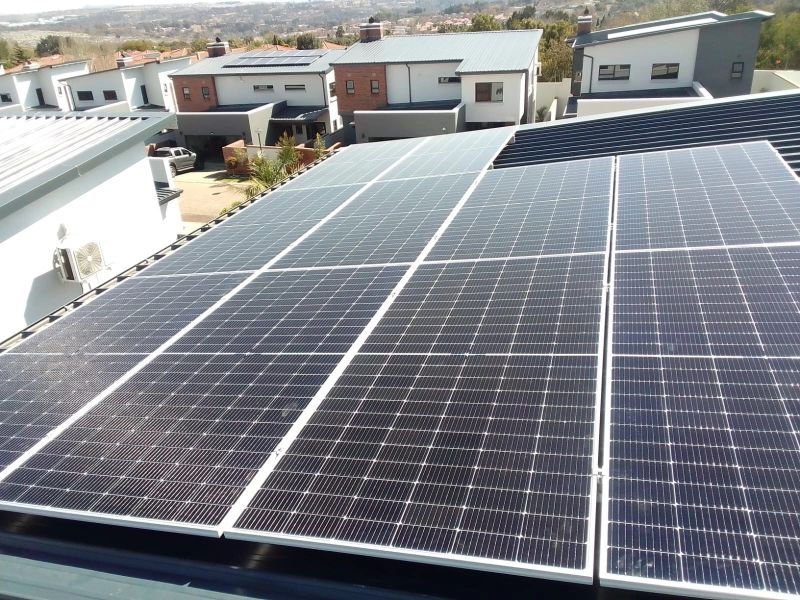
It is the first question almost every homeowner asks, and the honest answer is that it depends on your home, not on a number someone can shout across a counter. The number of panels you need comes down to how much electricity you use, how much of that you want to cover with solar, and how much sun your roof gets. Get this wrong and you either sit in the dark during load shedding or overspend on capacity you never use. This guide walks you through how the calculation actually works, so you go into a quote knowing roughly what to expect. If you would rather we do the full calculation properly for your home, call Mtshali Power Electronics and Infrastructure on 031 100 2679 or email service@powerinfrastructure.co.za.
Start With Your Usage, Not the Roof
The mistake most people make is starting with the roof and asking how many panels fit. The right starting point is your electricity usage. Pull out a recent municipal or Eskom bill and find your monthly consumption in kilowatt-hours, written as kWh. An average Durban home uses somewhere between 600 and 1,200 kWh per month, though heavy users with pools, multiple geysers, and air conditioning can run well above that.
Divide your monthly usage by 30 to get your daily usage. If your home uses 900 kWh a month, that is roughly 30 kWh per day. That daily figure is the foundation of everything that follows.
The Basic Formula
Here is the calculation in plain terms:
Number of panels = daily energy needed, divided by (panel wattage multiplied by peak sun hours multiplied by a system efficiency factor)
Let us break down each part.
Daily energy needed is your daily kWh, or the portion of it you want solar to cover. Many homeowners do not try to cover 100 percent of their usage, especially at the start. Covering the daytime load and essential backup is often the smarter, cheaper goal.
Panel wattage is the rating of each panel. Modern residential panels are commonly around 550 watts, which is 0.55 kW each.
Peak sun hours is the number of hours per day your location gets strong, usable sun. Durban and the KZN coast average roughly 4.5 to 5 peak sun hours a day across the year, but you should never design to the average. We design to the worst realistic day, which on the KZN coast means about 3 peak sun hours: a cold, overcast winter day. The reason is simple and it is covered in the next section, but the short version is that a system sized to the average leaves you short exactly when you need power most.
System efficiency factor accounts for real-world losses from wiring, inverter conversion, heat, and panel dust. A sensible figure is around 0.8, meaning you actually get about 80 percent of the theoretical output.
Design for the Worst Day, Not the Average
This is the single most important principle in sizing a solar system, and it is where most installers quietly cut corners to make a quote look cheaper. If you size a system to the yearly average of 4.5 or 5 peak sun hours, it will look great on paper and perform well through summer. Then winter arrives, the days shorten, a run of grey overcast coastal days sets in, and the system that was sized to the average cannot keep up. That is also exactly when demand climbs, because everyone is heating water and running heaters, and when load shedding tends to bite hardest.
People do not remember the 300 days their solar worked. They remember the cold July morning it left them in the dark. A system designed to the worst realistic day carries them through winter and through overcast stretches without drama. That is why we design to roughly 3 peak sun hours for KZN coastal homes, not the sunny-day average. Yes, it means a slightly larger array and a bigger battery than a bargain quote, but it is the difference between a system you trust and one that disappoints you every winter.
A Worked Example
Say your home uses 30 kWh a day, and you want solar to cover about 20 kWh of that, with the rest coming from grid or careful use. We size to the worst-day figure of 3 peak sun hours.
Energy per panel per day = 0.55 kW multiplied by 3 sun hours multiplied by 0.8 efficiency = roughly 1.32 kWh per panel per day.
Panels needed = 20 kWh divided by 1.32 = roughly 15 to 16 panels.
So a home targeting 20 kWh of daily solar coverage in Durban, designed to hold up on the worst day, needs in the region of 15 to 16 panels of 550 watts each. If you wanted to cover the full 30 kWh, you would be looking at around 23 panels. Notice how much larger this is than a system sized to a sunny-day average, which is precisely the point. The cheaper quote that promises the same coverage off fewer panels is almost always sized to the average, and it is the one that leaves you short in winter.
Battery Autonomy Is a Budget Decision
Sizing the panels for the worst sun is half the job. The other half is deciding how long the battery should carry you through a stretch with little or no sun. Ideally you want at least a full day of stored autonomy so a single grey day does not leave you flat, and more if you want a buffer across a multi-day cold front. How many days of autonomy you carry is largely a budget decision, because battery capacity is the most expensive part of the system. We lay out the options honestly: what one day of backup costs, what more buys you, and where the sensible balance sits for your home and budget. What we will not do is quietly undersize the battery to win on price and leave you caught on the day it matters.
Panels Are Only Part of the System
Panels generate power, but they do not store it. If your goal includes keeping the lights on during load shedding, the battery is just as important as the panel count, and often more so. A home can have plenty of panels and still go dark at night if the battery is undersized. The inverter also has to be rated to handle the load you want to run at once, such as a geyser plus a kettle plus a pool pump. This is why panel count alone never tells the full story.
For most Durban homes we pair the array with Sunsynk or Deye inverters and Hubble 48V batteries, sized together as one system. The panels, inverter, and battery all have to match your usage pattern, not just your total consumption.
Why a Proper Load Study Beats a Rough Estimate
The calculation above gives you a ballpark. What it cannot do is account for when you use power, what runs at the same time, how much backup you want during an outage, and how your usage shifts between summer and winter. A home that uses most of its power in the evening needs a very different battery strategy from one that runs heavy during the day.
That is what a proper load study does. We look at your actual consumption, your appliances, your backup priorities, and your roof, and we size the panels, inverter, and battery as one matched system. It is the step that separates a system you are happy with in three years from one you regret. You can read how we approach it on our load study page, and see the full home offering on our residential solar Durban page.
Frequently Asked Questions
Can I just count my roof space and fit as many panels as possible? You can, but it usually leads to spending on generation capacity your battery and usage cannot make use of. Sizing from your actual consumption is smarter and cheaper.
How many panels does an average Durban home need? Most homes land somewhere between 8 and 16 panels depending on usage and how much of the bill they want to cut. The only way to know your number is to calculate it from your real consumption.
Does load shedding change how many panels I need? Load shedding affects your battery sizing more than your panel count. Panels charge the battery during the day, and the battery carries you through outages. Both have to be sized together.
How much sun does Durban get for solar? Durban and the KZN coast average roughly 4.5 to 5 peak sun hours a day across the year, which makes the region well suited to solar. For sizing, though, we design to the worst realistic day of about 3 peak sun hours, so the system holds up in winter and through overcast stretches rather than only on sunny days.
Will more panels always mean a lower bill? Only up to the point your usage and battery can absorb the generation. Beyond that you are paying for power you cannot use or store, unless you are feeding back to the grid, which most residential setups are not built around.
Can I start small and add panels later? Yes. Sunsynk and Deye systems are designed to scale, so you can start with a smaller array and battery and expand as your budget and needs grow.
Get Your Real Number
The formula above will get you close, but your home deserves a proper calculation, not a guess. We size the panels, inverter, and battery together from your actual usage, and on financed systems you pay it off monthly instead of all at once. Call 031 100 2679 or email service@powerinfrastructure.co.za to book a home load study and get the exact number for your house.


Comments